ラベル 撮影 の投稿を表示しています。 すべての投稿を表示

2015年10月30日金曜日

最近の写真・Recent Photos

最近、あまり日記を書いていないね。もう、モチベーションがなくなったかと思うところかもしれないけど、モチベーションじゃなくて、時間の問題だ。確かに、1年、2年間前より、日記を書く気が減ったけど、まだまだ書きたいことがあるぞ。

でも、この日記の中に、あまり書かない。それより、写真を発表したいと思う。
 
田舎に住んでいるから、あまりいい被写体がないと思うかもしれないけど、違う。逆に、田舎に興味があって、田舎の本体を詳しく記録したい。なので、田舎の写真を集めていて、この日記で少し発表する。

Recently I haven’t written much in my blog. You might be thinking that I’ve run out of motivation to write, but it hasn’t been so much about motivation as it has been about time. For sure, my enthusiasm for writing has gone down compared to a year or two ago, but there are still many things I want to write about.

However, for this entry, I don’t really want to write much. Rather than writing, I’d rather present some photos.

I live in a rural area, so you might think that there aren’t many interesting things to photograph, but that’s not true. It’s the reverse. I’m quite interested in rural Japan, so I want to document it in detail. So, I’ll present some photos that I have put together of rural Japan.

これは多久市。田んぼが多いど田舎だ。この写真を撮ったとき、立入禁止のところに立ち入りした。笑

This is Taku. This area has many rice paddies. When I took this picture, I had ignored a sign that said “No Trespassing!”

多久といえば、田んぼや山や青い空は頭に浮かぶ。僕は多久に住む前、稲を実際に見たことが無かった。

When you say Taku, rice paddies, mountains, and blue skies come to mind. Before living in Taku, I had actually never seen a rice plant in real life.

田んぼは生き物で群がっている。鳥、クモ、トンボやカエル、野生の動物で騒がしい。このカエルは僕のカメラのシャッターを聞いたら、逃げなくて、逆に寄った!シャッターの音はカエルの鳴き声に近いかな?それとも、テンズのガラスの反省で、カエルは他のカエルを見えたと思ったのだろう?

Rice paddies are teeming with different kinds of wildlife. They are alive with birds, spiders, dragonflies, and frogs, to name a few. When this frog heard the sound of my camera’s shutter, rather than running away, it actually came closer to me. I wonder if the shutter noise is similar to the noise those frogs make? Or maybe it saw its own reflection in the glass of the lens and thought it was another frog?

今月、青い田んぼは金色になって、いよいよ米の収穫期になったね。この田んぼを何回見ても、綺麗だと思った。

This month, the green rice paddy fields turned to gold, which means that it is time to harvest the rice. Every time I saw this field, I always thought it was really beautiful.

でも、田んぼはいつか切り倒され、収穫される運命がある。この機械は掃除機のように稲を吸い込んで、米を外して、タンクの中に置く。

But, rice plants are destined to be cut down and harvest. This machine was sucking up the plants like a vacuum, separating the rice from the plant, and then stored the rice in a tank.

稲刈りしている人を見たら、面白くて新しいカメラレンズを試してみたかった。この機械はもう切り倒された稲を食い込んで、稲の干し草を俵にして出す機械だ。荷造り機と呼ばれるものなのだろう。とりあえず、面白かった。

When I saw the guy harvesting the rice, I thought it was interesting and decided to test out my new camera lens. This machine was sucking up the leftover part of the rice plant after the rice had been separated and wrapping it into bales.

先週末、多久祭りがあったから、見に行った。日本とアメリカの祭りを比べたら、日本の祭りは大体食べ物を中心とするけど、アメリカの祭りは食べもやゲームや商品、ジェットコースターまである。日本の祭りは大きかったら、特別な物事があるかもしれないけど、多久祭りのような小さな祭りは一般だという気がする。

Last week, there was a festival that I went to. Compared to American festivals/fairs, festivals in Japan seem to be mostly centered on food, whereas American fairs tend to include food as well as games, booths selling products, and even roller coasters. If Japanese festivals are big, then they might have something special, but I get the feeling that the one here in Taku was fairly typical of festivals throughout Japan.

食べ物を中心とするけど、演奏もあった。

It was centered around food, but there were also some small stage performances.

真剣な顔。A serious face.

このばあさんは典型的な田舎人だ。彼女の顔のしわとか、丸めている背中とか、低い身長を見れば、日本の歴史を見える感じがする。

This old lady looks like a stereotypical farmer’s wife. You feel like you can see Japan’s history in the wrinkles in her face, her hunched back, and short stature.

ひょっとこ。

These are called hyottoko. They basically are people that dress up in ridiculous costumes and do a weird dance.


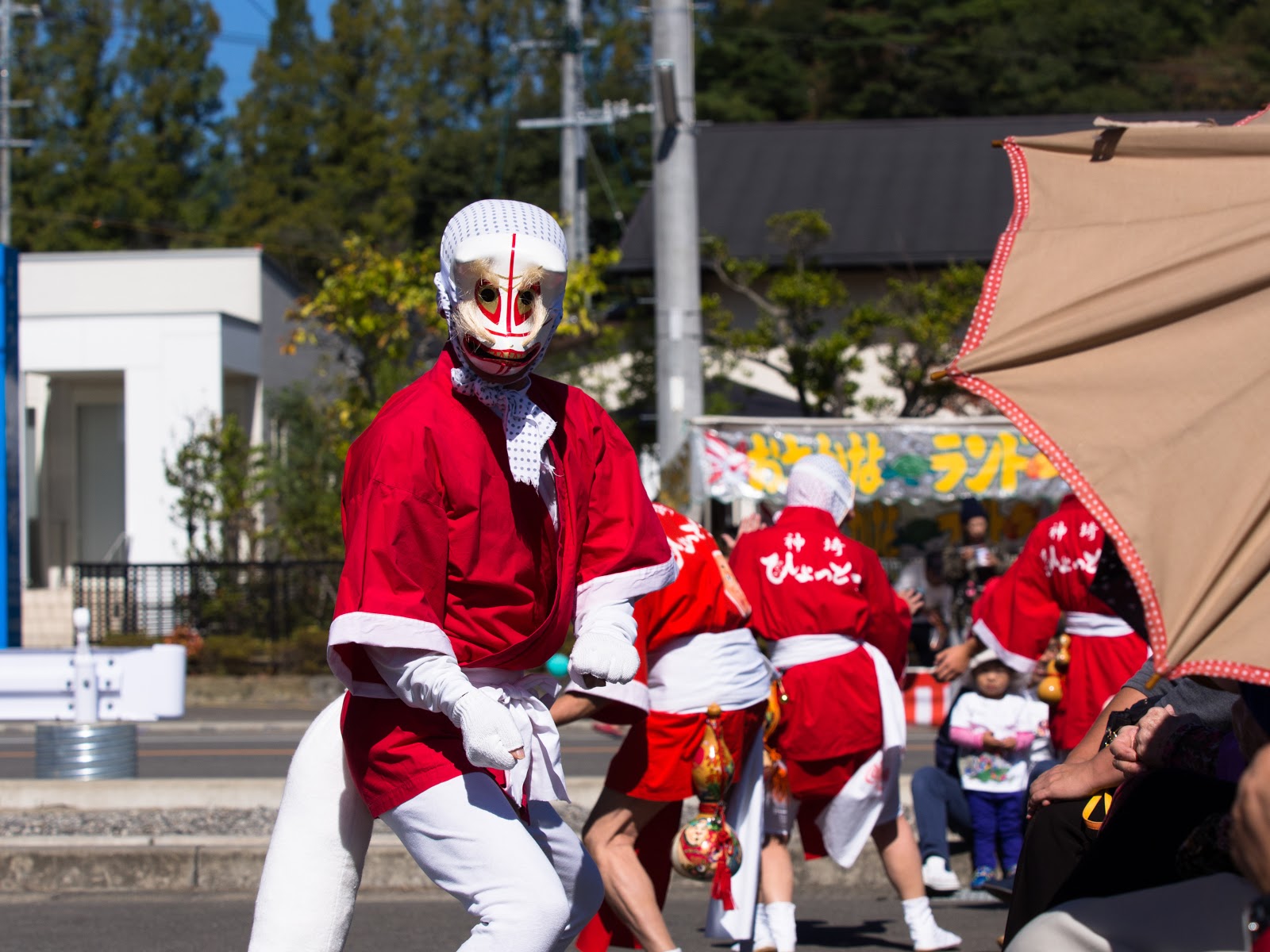
正直に言えば、そのひょっとこはあまり印象を与えなかった。でも、まあいっか。

多久のアルバムを見たかったら、どうぞこちらへクリックしてください。


I’d have to say that these hyottoko were not that impressive. But, whatever.

If you’re interested in seeing the rest of my Taku album, feel free to check it out here.


2015年1月7日水曜日

今からの挑戦 ・ Challenges from here on out


日本に来る前に、すごくワクワクしていたけど、来た後、何となくそのワクワクの気持ちがなくなった。なぜかといえば、日本に一年間の留学をするためにいろいろ頑張ったけど、その夢を現実にした後、次の挑戦を考える必要だろう。次の挑戦を発見する前に、なんか怠ける気持ちがあった。それに、学校の授業はそんなに面白くないので、勉強する気が出なくて、逆に勉強したくない気が出なかった。なので、「迷っている」という気がした。

でも、もちろん、この最後の学期、卒業する前に、就職活動をしないといけないだろう。それは挑戦じゃないかといっても、あまり面白い挑戦ではない。ただの「挑戦」ではなく、新しい「夢」が欲しがっていたと思う。「英語の先生になるのはマイカの夢なんじゃないか?」といえば、確かにそうだ。僕の夢だ。でも、日本に来た後、一人で考える時間が多くて、結局、一生に英語の先生として働かないということに気づいた。ん、すこし違う。一生、英語を教えることしかしたくないって言ったほうが正確だと思う。実は、「本当の仕事」をしたくないと思う。心の中に、一番求めていることは「自由」だ。ほかの人の意思を従うなんて、僕にとって嫌だ。自由になったら、「本当のマイカ」はついに生まれる気がする。

これからやることはたくさんある。就職活動を成功させて、日本で英語を教える仕事を見つける。就活する同時に、真剣になって、僕の写真撮影と動画撮影の能力、英語を教える能力や日本語能力を上達し続ける。その上、日本に関していろいろなことを研究して、写真と動画と執筆で発見したことを他人に教える。

本当の挑戦は今から。いよいよ、本当のマイカは登場。

***

Before coming to Japan, I was really excited, but after I got here, for some reason that feeling of excitement went away. If I ask why, I'd probably say it's because although I worked hard on lots of different things in order to study abroad in Japan for a year, after I made that dream come true, I needed to think of the next challenge in my life. Before discovering the next challenge, I just felt kind of lazy. On top of that, my classes in school weren't very interesting, so rather than feeling a desire to study, I actually felt a great desire to not study. So, I felt "lost".

But, of course, on this, my final quarter of college, before graduating, I need to look for a job. Even if you say that that's a challenge, it's not really an interesting challenge. I wasn't looking for just a "challenge", I was looking for a new dream. "But isn't being an English teacher your dream, Micah?", you ask. That's true, it is my dream. But, after I came to Japan, I've had a lot of time alone to think, and in the end, I realized that I won't work as an English teacher for the rest of my life. Hmm, that's not quite right. It's more accurate to say that I want to do more than just teach English all my life. The truth is, I don't think I want to have a "real job". Deep down, the thing I want most is freedom. To me, following someone else's will doesn't feel right. When I become free, I feel that the "real" Micah will finally be born.

There's a lot of stuff I'm going to do going forward. I'm going to successfully find a job teaching English here in Japan. While doing that, I'm going to get serious about continuing to increase my abilities in photography, videography, English teaching, and Japanese. On top of that, I'm going to research stuff related to Japan, and teach others what I discover through photography, videography, and writing.

The real challenge starts now. The real Micah's time has come.

2014年6月4日水曜日

"Open" and "Closed" Classrooms

I said in my previous entry that I consider Brian Bresnihan's classroom environment to be "open" and explained that in one sense, it is "open" because students are free to disagree, to be "impolite". It is open in another sense as well that will be easy to understand if I compare his classroom environment to other "closed" environments.

A typical lecture-hall classroom.

Students studying English. They are creating a story on the fly.


A student concentrating intently on what another student is saying.

After 20 or 30 minutes creating the story together, the students write the story down, adding their own ending.

I wonder what she's writing?

The lecture hall above is probably familiar to many students in college across the US. While I have no pictures of a high school classroom, from what I've seen depicted in countless school-life anime and have confirmed with college students in Hyogo University, in middle and high school, students just sit in front of the teacher, stare, and listen to him/her talk. There is little student-teacher or student-student interaction in-class. Class participation for most students consists of showing up and staying awake. This might sound familiar to many American students because many classrooms in the US are the same.

Now look at the picture of the students sitting a circle, creating a story in English together. Where are they looking?

This week, I had a very enlightening experience. In a seminar-style class, I gave a presentation in Japanese about a book the class had read. At the end of my presentation, I did something I expected nobody else in the class would do: I asked questions. They weren't just simple yes/no questions; they were open-ended questions. As I suspected, my classmates didn't rush to be the first to answer. My attempt to create a more Evergreen-style seminar environment quickly failed. The teacher predictably asked some students directly to try answering the questions I asked.

Then something interesting happened.

The students, responding to my question, looked at the teacher and sheepishly answered the question. The teacher told several students to look at me since they were answering my questions. Some found it very difficult to do, and most of the time only looked down or stared into the distance, occasionally making eye-contact with me (or more often, with the teacher).

While I've met some 20-something year-old students in the US that had difficulty expressing themselves in large groups, I've never been in a classroom where the students felt so unusual discussing a topic with each other. American students, in my experience, are generally ready to give their opinions on just about anything, even if they know little about the topic. The way the students acted was how I would expect young kids to act, not adults having an adult conversation.

My presentation plus two questions took up the rest of class, so my presentation partner didn't have a chance to do her part. While my presentation was probably three times longer than other presentations in the past, the fact that so little class time was provided for the activity says to me that the teacher was unprepared for any class discussion. As Rohlen said in Japan's High Schools, students and teachers alike are not very experienced with class discussion. While the ゼミ (seminars) at Hyogo University were described to me as "Evergreen style seminars", they don't even remotely resemble any seminar I have been part of at Evergreen.

Polite Society and the Classroom in Japan

I've been in Kobe for two months now, and every week I have participated in the Tuesday afternoon English classes that Brian Bresnihan teaches. On Tuesdays, he teaches an advanced English class, and then a seminar class which is also advanced. I've observed the way he teaches and how students react to the class assignments, and I find his classes to be much more "open" than classes taught by Japanese teachers.

Students are talking and recording their conversation on their smartphones.

Students are talking and recording their conversation on their smartphones.

After recording their conversation, they were asked to transcribe the conversation.

What do I mean by "open"? For homework yesterday, students read a certain passage and discussed the passage in pairs. The topic was about politeness. The passage said that some people think that politeness means letting others do whatever they want, but such a way of thinking is wrong. Sometimes we must upset individuals or whole societies. While discussing that passage with a student, we talked about politeness in classrooms.

In Japanese culture, generally people tend to follow the will of a group, which is normally the will set by one member who has seniority, authority, or the respect of the rest of the group. This behavior is first learned in classroom environments where classroom presidents/leaders are selected and teachers enforce school policy by encouraging classmates to monitor and "correct" each others behavior. Students learn that it is difficult to disagree with a group because they may be bullied or ostracized by the group. Instead, they conform. This is where the forming of honne (one's real opinion) and tatemae (one's public, "safe" opinion) first begins and continues into adulthood.

Upsetting a group is considered "rude", and reaffirming the group's position is considered "polite". If one upsets the group, one upsets the "harmony" of the group, the 和 (pronounce "wa") of the group. Japanese leaders promote group harmony starting from the classroom all the way to national politics. Thus, one can say that Japanese society is "polite" society, otherwise the harmony of society is disrupted.

In that context, the passage students discussed yesterday implies that sometimes the "harmony" of a group needs to be disrupted. One student said that she thought that American society is better in this way because it is more "open", whereas Japanese society was more "closed". Although she thought it was important for people to be polite, she believed that being true to oneself is more important. In other words, she doesn't like the honne/tatemae culture.

I explained what the author of the passage was saying to one student who didn't understand and then I asked how she felt. She agreed. I mentioned that disagreeing with a group is difficult, using the example of the classroom environment. She said that it was hard and that there is bullying in classrooms related to being "polite". She said that she had a friend that was trying to bully another student, but that she stopped her from doing it. Although it was hard at the time to upset her friend, in the end it had a positive outcome. Upsetting individuals or groups is hard at the time, but in the long-term, it is better for someone to be upset.

So in the sense that one is free to disagree in the classroom environment in Brian Bresnihan's class, it is "open". However, there is another sense in which is it open, but that is more easily understood by comparing it to a "closed" classroom environment, which I'll write about next.

2014年2月16日日曜日

海女・Ama


海女を知っている?数日前、海女という女性を知った。海女は真珠を手に入れるために、ふんどししか着なくて、2分間ぐらい海に飛び込んで、カキを持ってくる女の人だ。元にアワビ、海草などを集めるために飛び込んだけど、真珠のほうは有利だったので、結局真珠を手に入れるために飛び込むことになった。

もっと真珠を得るために、真珠のないカキを水上に持ってきて、真珠の核が入れられた。入れられた後、また海に返って、真珠は作られたときにまた海女に釣られた。そういう真珠は養殖真珠という。興味深いでしょう?海女はその仕事で独立になれるだろう。でも、なぜ男の人じゃなくて、女の人はそういうことをするのだろう?女性のほうは脂肪の層が厚くて、水の冷たさから防御されるからと言われるけど、本当かな?一般的に、女の人の胸と腰の脂肪のほうが厚いけど、そんなに役に立つかな?太っている男の人もいたんじゃないか?

今も海女がいるけど、だんだん消えているそうだ。現代の海女は潜水服を着る。まだ海女として働いている90歳のおばさんもいるんだ!すごいでしょう?僕は90歳のおじさんになったら、そんなに元気になると嬉しい。(^_^)

去年、海女として働いている女性について、「あまちゃん」というドラマもあったけど、海女のことを知る前に、あまちゃんを知らなかったので、話に詳しくない。少し見てみるかも。

***

Have you ever heard of Ama? I learned of them a few days ago. Ama are women that dive under water for around 2 minutes at a time, wearing nothing but a loincloth, in order to get pearls. Originally, they would dive for alabone, seaweed, and other kinds of shellfish, but since pearls were more valuable, in the end they focused on diving for pearls.

In order to get more pearls, they bring clams without any pearls in them up to the surface and put a pearl nucleus inside the clams. After doing so, they return them to the sea, and when the pearl is complete they are fished out by Ama. Those kinds of pearls are called "cultivated pearls". Pretty interesting, right? Ama are able to be independent with that job. But, I wonder why women, not men, do it? They say it's because women have a thicker layer of fat that protects them from the cold water, but I wonder if that's true. Generally, women have more fat around their breasts and hips, but I wonder if its really that useful? Aren't there fat guys, too?

There are Ama even now, but they are gradually disappearing it seems. Modern Ama wear diving suits. There are even 90 year-old women working as Ama! That's pretty amazing! I hope that when I'm a 90 year-old guy I'm as active and energetic!

Last year, there was a drama about a woman that worked as an Ama named "Ama-chan", but before I learned about Ama, I'd never heard about it, so I don't know any of the details of the story. I might try watching it.

2013年12月27日金曜日

千里の道も一歩から・The journey of a thousand miles begins with one step

最近、寒いし、学校が休んでいるので、自転車に乗っていない。でも、昨日、カメラを持っていって、オリンピアの町中へ自転車に乗って、人の写真を撮りに行こうと思った。クリスマスだったので、人はあまりいなかったけど、踊っていた女性を5人見かけて、写真を撮りに行きたかった。

けど、僕にとって、そんなことはそんなに簡単にすることができない。いい写真を撮りたかったら、被写体(5人の女性とか)に近づかないといけない。近づいて、写真を撮りに見えたら、その人はどう反応なのか分からないでしょう?僕にとって、そんなことすごく怖い。なんで怖いのか分からない。僕は「写真を撮ってもいいですか?」と聞けるだろう。でも、ポーズなしの写真も撮りたいので、できたら、聞きたくないで撮りたい。

最近、このブログの投稿を見て、「こういう写真を撮りたい!」と思った。マレーシア人の写真家は東京に写真を撮りに行った。彼の写真はかっこいいでしょう?もちろん、自転車に乗っている人の写真は一番いいけど、最初の写真と「Happy People. Shinjuku」と「Rainy Streets in Akihabara」と「Connecting Tunnels. Ebisu」という写真も好き。

そういう写真を撮るために、いろいろな練習が必要だ。全く知らない人に近づいて写真を撮って、その人と話しかける技能を磨いたら、他の状況でもその技能を使えるようになると思う。知らない英語の先生に会いに行って、会話をしたり、取引先を作るために知らない人と話しかけたりするようになると思う。だから、この練習は撮影だけじゃなくて、いろいろなことに関連付けたことだ。

あ、そうだ、その5人の女性の話。僕はちょっと考えて、彼らはそんなに怖くないと思った。だって、公開に踊ったら、他の人に見られるでしょう。写真を撮るのはそんなに変じゃないので、「彼らは大丈夫だ」と思って、近づいた。そのとき、1人の女性は「ね、写真を撮ってくれませんか?」と聞いて、僕にカメラを渡した。彼女のカメラでちょっと写真を撮って、「僕のカメラでも写真を撮ってもいいですか?」と聞いて、撮った。


思ったよりうまく行ったけど、後に他のところに行って、人を見かけたけど、近づいて写真を撮る勇気は出てこなかった。(>_<)(まあ、上のスマホを使っている人の写真を撮れたけどね。)「ダメだ、僕の弱さを超えられなかった」と思ったけど、よく考えたら、それらの女性たちの写真を撮ったので、昨日の練習はうまく行ったと思う。弱さを一気に超えるもんじゃないだろう。僕は一歩ずつ進んでゆこう。

***

Since it's been cold recently and I haven't had school, I haven't been riding my bike. But today, I decided to take my camera, ride my bike downtown, and take some pictures. It was Christmas, so there were barely any people, but I spotted five ladies dancing and wanted to take some pictures of them.

But, doing something like that isn't so easy for me. If I want to take some good pictures, I have to get close to my subject (like the five ladies). If I get close and look like I'm going to take a picture, I don't know how that person will react. To me, that sort of thing is scary. I don't know why it's scary. I can ask them if I can take a picture, right? But, I want to take pictures without posing, so if I can, I'd like to take the pictures without asking.

I recently saw a post on this blog and thought that I wanted to take pictures like the ones on the blog. A Malaysian photographer went to Tokyo to take some pictures. Aren't his pictures great? Of course, the ones with people riding bikes are the best, but I also like the first picture, and the ones titled Happy People. Shinjuku, Rainy Streets in Akihabara, and Connecting Tunnels. Ebisu.

In order to take pictures like those, I have to practice different stuff. If I can develop a skill for walking up to a complete stranger, taking their picture, and then starting a conversation with them, I'll be able to use the skill in other situations, too. I'll be able to go to meet and talk with English teachers I don't know, start conversations with someone in order to make business connections, stuff like that. So, this practice isn't just for photography; it's related to other stuff, too.

Ah, right, about the five ladies. When I thought about it, they actually weren't so scary. If they are dancing in public, then they must expect other people to see them. Taking a picture of them wouldn't be so weird, so I thought that they'd be cool about it, so I approached them. When I did, one of them said, "Hey, could you take some pictures for me?" and handed me her camera. I took a few pictures with her camera, then I asked if I could take some with my own camera and got to it.

It went better than I thought it would, but afterwards I went someplace else and saw some other people, but I couldn't muster the courage to get close and take some pictures of them. (Well, I was able to take the picture above with the guy on his smartphone.) I was a bit hard on myself at first, but then when I thought about it, since I was able to take pictures of those ladies, I think my practice yesterday was a success. Weaknesses aren't something you can overcome all at once. I'll just keep moving forward one step at a time.